Augmented Reality (AR) and Virtual Reality (VR) are immersive technologies that are reshaping how we perceive and interact with digital content. AR enhances the real world by overlaying digital information such as images, data, or 3D objects on top of the physical environment. This allows users to interact with digital elements while still being aware of their surroundings. Popular AR applications include mobile apps like Pokémon Go, Snapchat filters, and AR-enabled shopping tools that let users visualize furniture, apparel, or home decor in their real environment before making a purchase.
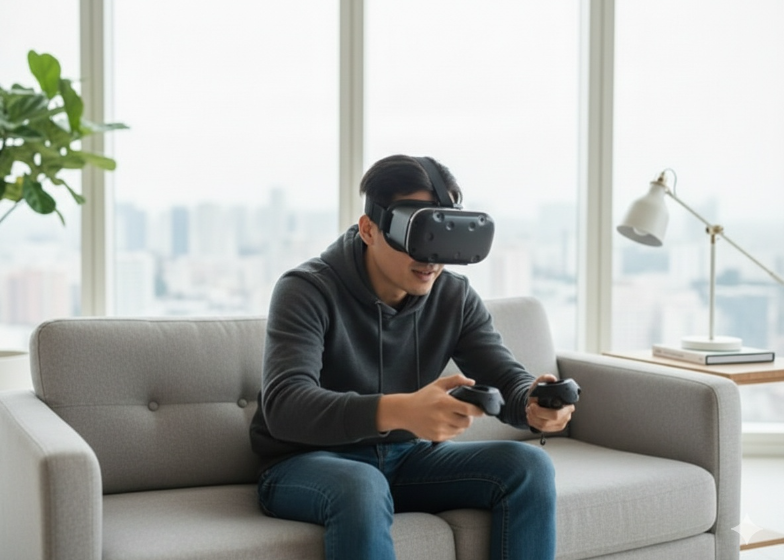
Virtual Reality (VR), by contrast, creates a fully immersive digital environment that replaces the physical world entirely. Using VR headsets like Oculus Rift, HTC Vive, or PlayStation VR, users can experience games, simulations, virtual tours, or professional training as if they are physically present in a new environment. VR is extensively applied in gaming, education, real estate, healthcare training, and professional simulations, offering interactive experiences that are fully controlled by digital content.
The primary distinction between AR and VR lies in the level of immersion and interaction with the physical world. AR integrates digital content into the real environment, whereas VR transports users into a completely virtual space. AR is typically more accessible through smartphones and tablets, while VR requires dedicated hardware for a fully immersive experience. Both technologies enhance learning, entertainment, and operational efficiency in unique ways.
Beyond entertainment, AR and VR have significant business and educational applications. AR can provide step-by-step guidance for industrial operations or remote assistance for technicians, while VR can simulate complex scenarios for training pilots, surgeons, or engineers. Companies are increasingly leveraging these technologies to enhance customer experiences, improve operational workflows, and create innovative revenue streams through interactive products and services.
Augmented Reality
Augmented Reality (AR) overlays digital content, such as text, images, 3D models, or animations, onto the real-world environment, enhancing the user’s perception of reality. AR allows users to engage with both the physical and digital worlds simultaneously, making it different from Virtual Reality, which fully immerses users in a virtual environment.
AR is commonly used in smartphones, tablets, and wearable devices like smart glasses. Applications range from interactive games (e.g., Pokémon Go) to virtual shopping experiences, educational tools that display 3D content, and navigation apps that overlay directions in real-world streets. AR improves engagement by delivering contextual, real-time information and facilitating interactive experiences without isolating users from their environment.
Businesses using AR can boost customer engagement, reduce returns through virtual try-ons, and develop innovative marketing campaigns. Retail solutions using AR have the potential to generate $50K–$500K+ annually depending on the scale and adoption.
Virtual Reality
Virtual Reality (VR) immerses users in a fully digital environment, replacing the physical world with simulated spaces. Users wear VR headsets and may use motion controllers or haptic devices to interact with the virtual environment. Unlike AR, VR does not blend with the real world but creates a completely artificial experience that can mimic reality or offer entirely fictional settings.
VR is widely applied in gaming, entertainment, education, and professional training. For instance, VR enables students to explore virtual historical sites, medical professionals to practice surgeries safely, and pilots to train in flight simulators. VR provides realistic, interactive experiences that are otherwise costly, risky, or impossible in the physical world.
Businesses can leverage VR to create immersive training programs, virtual tours, and entertainment experiences. For example, VR training solutions in healthcare and aviation can save institutions $50K–$500K annually by reducing errors, improving learning efficiency, and lowering the costs of physical training setups.
AR and VR in Different Industries
AR and VR have distinct applications across sectors, each complementing the needs of users and businesses in unique ways.
Retail and E-commerce
AR allows customers to virtually try on clothing, accessories, or visualize furniture in their own environment. VR can create immersive virtual stores where customers explore products in simulated environments, boosting engagement and sales.
Healthcare
AR assists surgeons by overlaying patient data during procedures and enables remote guidance. VR supports medical training, surgical simulations, and therapy, providing safe practice without real-world risks.
Education and Training
AR enriches learning with interactive 3D models and live data overlays, while VR immerses students in virtual labs, historical events, or complex simulations, improving comprehension and engagement.
Manufacturing and Maintenance
AR delivers on-the-job guidance through overlays, while VR enables engineers to test factory layouts, simulate workflows, or conduct machinery tests virtually, reducing errors and costs.
Entertainment and Gaming
AR enhances real-world gaming, live events, or social media with digital overlays. VR provides fully immersive gaming, concerts, and cinematic experiences with complete sensory engagement.
Real Estate and Architecture
AR helps buyers visualize furniture, renovations, or designs in real environments. VR provides virtual property tours and architectural walkthroughs, enabling remote exploration of spaces.
Advantages of Augmented Reality
- Enhanced User Engagement: Overlays digital content on the real world for interactive, informative experiences.
- Improved Training and Learning: Offers interactive simulations for education and professional development.
- Boosted Sales and Customer Interaction: Virtual try-ons and visualization reduce returns and increase purchases.
- Real-Time Guidance and Maintenance: Provides step-by-step instructions for technical tasks, reducing errors and downtime.
- Revenue Opportunities: Businesses can enhance engagement, reduce costs, and generate $50K–$500K/year depending on scale.
Advantages of Virtual Reality
- Immersive Experiences: Fully simulated environments for gaming, training, and exploration.
- Safe Training Environments: Allows practice in risk-free settings for healthcare, aviation, and industrial tasks.
- Remote Exploration and Collaboration: Enables virtual tours and team collaboration across locations.
- Enhanced Entertainment: Offers immersive gaming, concerts, and interactive media experiences.
- Revenue Potential: VR solutions can save costs and generate $50K–$500K+ annually, depending on applications.
Challenges of Augmented Reality
- Hardware Limitations: AR requires capable devices with cameras and sensors; poor hardware can reduce performance.
- High Development Costs: Creating AR content and apps requires skilled developers and design resources.
- Privacy Concerns: AR collects real-world data, raising potential security and privacy issues.
- Compatibility Issues: AR experiences may vary across devices or platforms, leading to fragmentation.
Challenges of Virtual Reality
- Expensive Hardware: VR requires headsets, controllers, and sometimes high-performance computers.
- Motion Sickness and Fatigue: Extended VR use can cause nausea, dizziness, or eye strain.
- Content Creation Complexity: Designing immersive VR environments demands advanced skills and resources.
- Accessibility Limitations: Cost, space, and technical requirements limit adoption for casual users or small businesses.
Summary
Augmented Reality (AR) and Virtual Reality (VR) offer unique ways to engage with digital content. AR enhances the real world by overlaying information, aiding in learning, shopping, maintenance, and professional guidance. VR immerses users in fully virtual spaces, ideal for gaming, training, virtual tours, and simulations. Both technologies provide opportunities for increased engagement, efficiency, and revenue, though they face challenges such as high costs, hardware requirements, and privacy concerns. As AR and VR advance, they continue to transform industries, user experiences, and business models across retail, healthcare, education, manufacturing, and entertainment.